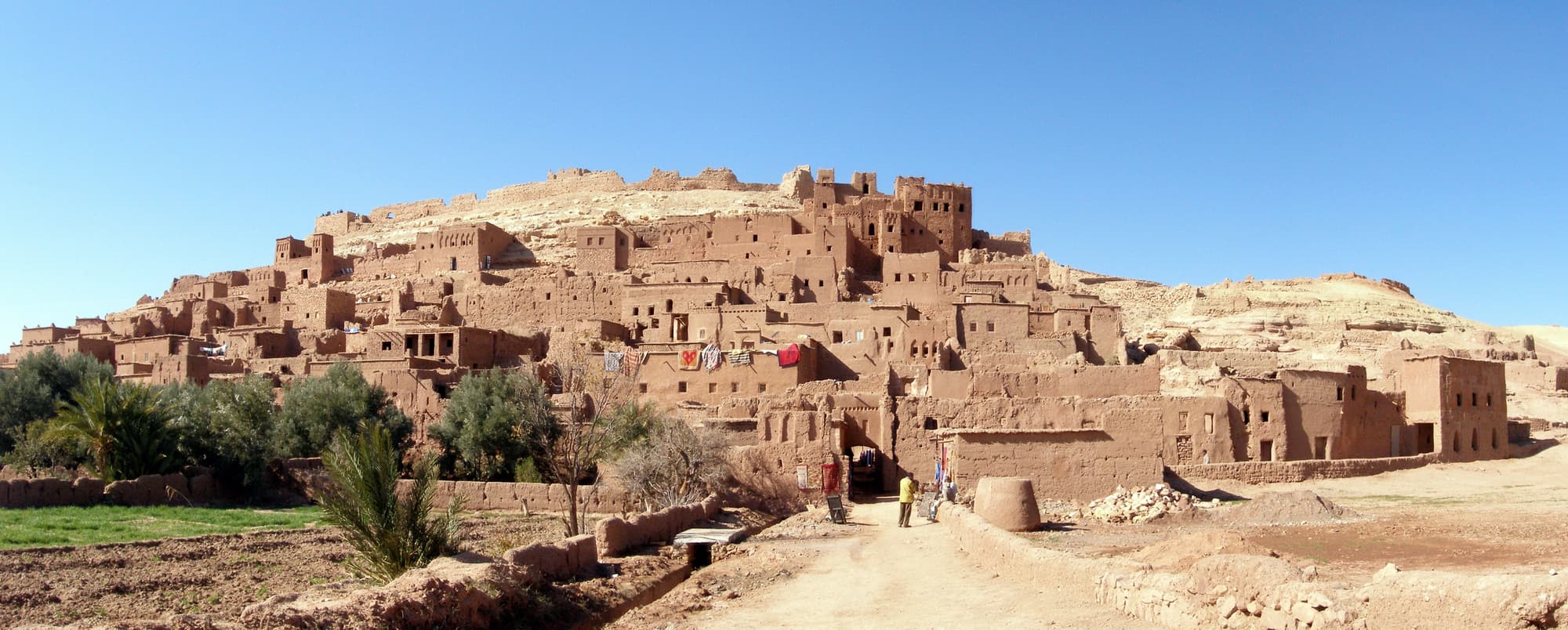
Aït Benhaddou sits on the desert side of the High Atlas, at the top of the pre-Sahara. That gives it a hot arid climate: enormous daily temperature swings, almost no rain, and a summer that is genuinely punishing. The short answer is March to early May, or late September to early November.
Aït Benhaddou month by month
| Month | Day / night | Crowds | Verdict |
|---|---|---|---|
| January | 18 / 1 °C | Very low | Empty and dramatic; cold nights, snow on the pass |
| February | 20 / 3 °C | Low | Almond blossom starts; still cold after dark |
| March | 24 / 6 °C | Rising | Green valley, snowy Atlas — excellent |
| April | 27 / 9 °C | High | The best month, and everyone knows it |
| May | 31 / 13 °C | Moderate | Warm but manageable; long evenings |
| June | 36 / 18 °C | Moderate | Hot. Early morning or late afternoon only |
| July | 40 / 21 °C | Low | Punishing at midday; cheap and quiet |
| August | 39 / 21 °C | Moderate | Same heat, more visitors |
| September | 34 / 17 °C | Rising | Cooling fast from mid-month; very good |
| October | 28 / 12 °C | High | Our favourite: warm, dry, golden light |
| November | 22 / 6 °C | Moderate | Quiet, comfortable, short days |
| December | 18 / 2 °C | Low | Cold and empty; check the pass for snow |
Spring: March to May — the best of the year
The almonds flower in February, the valley greens up, and daytime temperatures sit in the mid-20s. The Atlas still has snow on it, which makes the drive over the Tizi n’Tichka spectacular. April is the single best month, and the busiest for it — book tours and guesthouses a week or two ahead.
Summer: June to August — hot, and we mean it
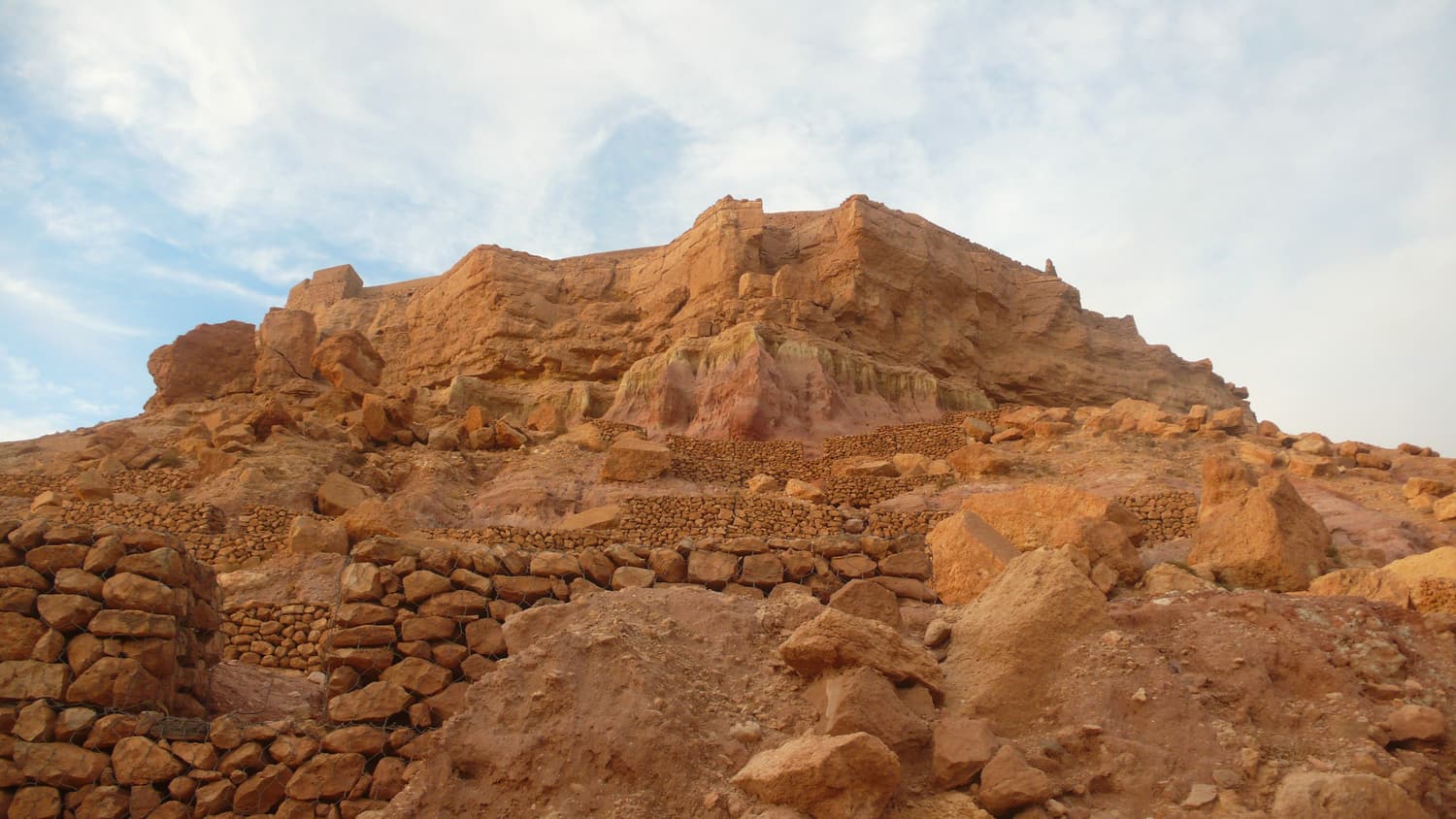
July and August routinely pass 40 °C in the valley, and the climb to the granary is entirely unshaded. It is doable if you go at 08:00 or after 18:00 and carry water, but the middle of the day is genuinely unpleasant. Prices are lower and the ksar is quieter at both ends of the day, which is some compensation.
Autumn: September to November — the other sweet spot
Late September onwards the heat breaks, the light turns golden and the crowds thin. October is close to perfect: high 20s, dry, and the low sun makes the earthen walls glow in the late afternoon. Our favourite month if you care about photographs.
Winter: December to February — empty, cold, and dramatic
Days are mild — high teens — but nights drop close to freezing and the guesthouses are not always well heated. The reward is a ksar with almost nobody in it and snow on the Atlas behind. Check the pass before you travel: the Tizi n’Tichka closes occasionally after heavy snow in January and February.
When to avoid
- Midday, July and August. Over 40 °C, no shade, flat light.
- The Easter fortnight. The single busiest period of the year at the ksar.
- After heavy spring rain. The Ounila can flood the crossing for a day or two, and the Ounila valley back road becomes unwise.
What about Ramadan?
Ramadan moves through the calendar and falls in the first quarter of the year through the late 2020s. Sites and tours run normally, but some village restaurants close during daylight and the roads are busy just before sunset. Guesthouses catering to visitors serve meals as usual. It is a rewarding time to travel if you are relaxed about the rhythm.