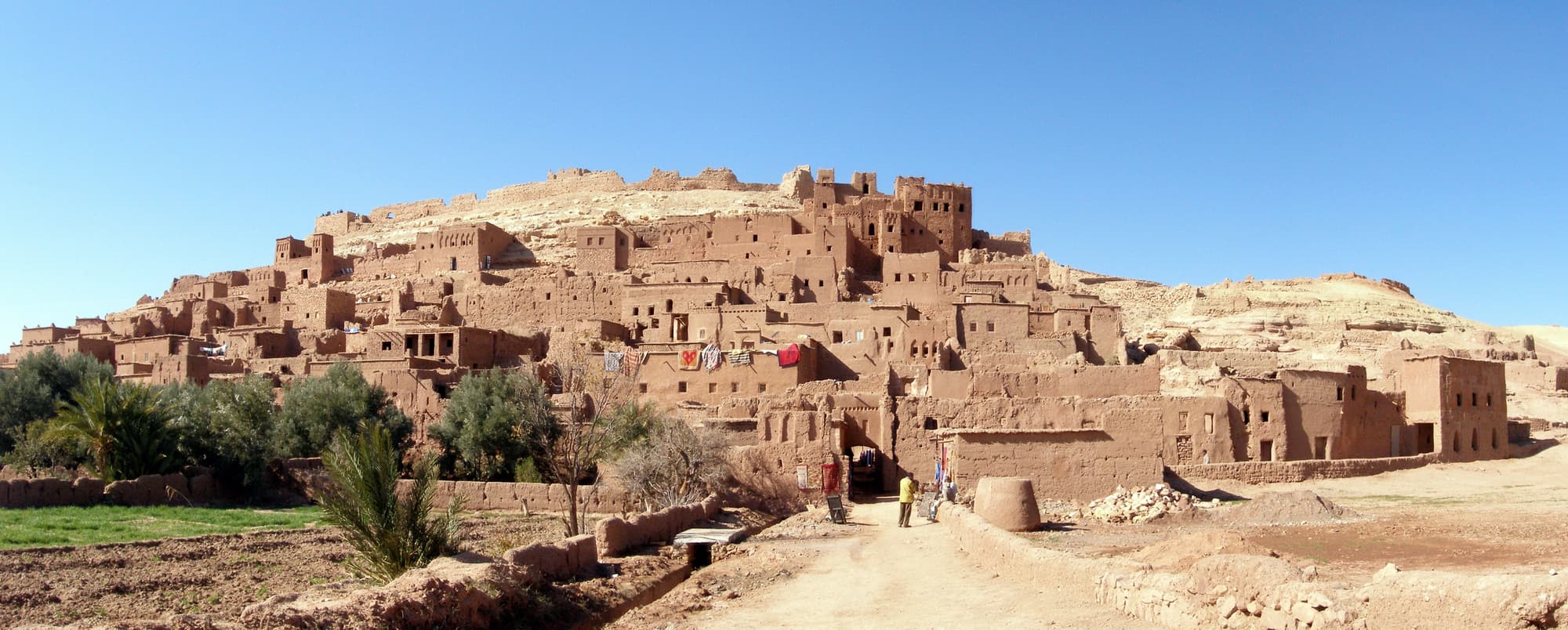
Aït Benhaddou is the most photographed place in southern Morocco and, for most visitors, the shortest stop of their trip. This guide is about fixing that: how to reach it, how long to give it, what it actually costs and how to see it when nobody else is there.
How long do you need?
- Two hours — cross the river, climb to the granary, come back down. This is what a day trip gives you, and it is enough to see the place.
- Half a day — add a kasbah interior, lunch on a terrace and the gladiator set below the village.
- One night — the version we recommend. The ksar at sunrise, with nobody in it, is a completely different experience from the ksar at midday.
- Three days — the ksar, Ouarzazate and the film studios, and the Ounila valley back road to Telouet.
Getting there
There is no train and no direct bus. From Marrakech it is 180 km over the Tizi n’Tichka pass — three to three and a half hours by car, four by coach, and about twelve hours round trip on a day tour. Our getting here guide compares all five options with prices.
What to see
 The ksar & village
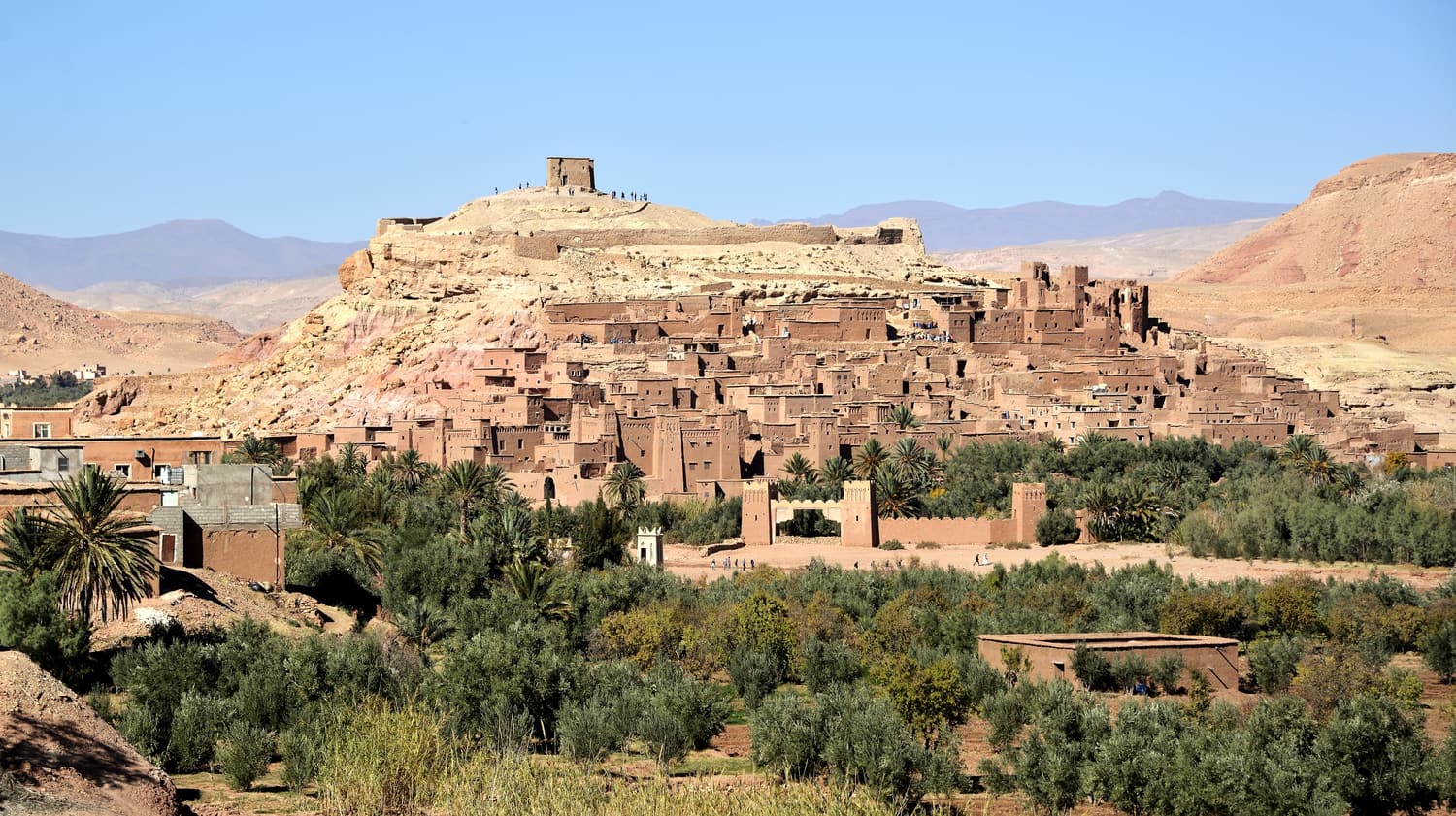
 Ksar of Aït Benhaddou
Morocco’s great earthen citadel
A fortified village of rammed earth stacked up a hillside above the Ounila river, listed by UNESCO in 1987 and the most recognisable image of southern Morocco. Cross the river, climb through the lanes and finish at the ruined granary crowning the hill.
 Atlas & Ounila valley
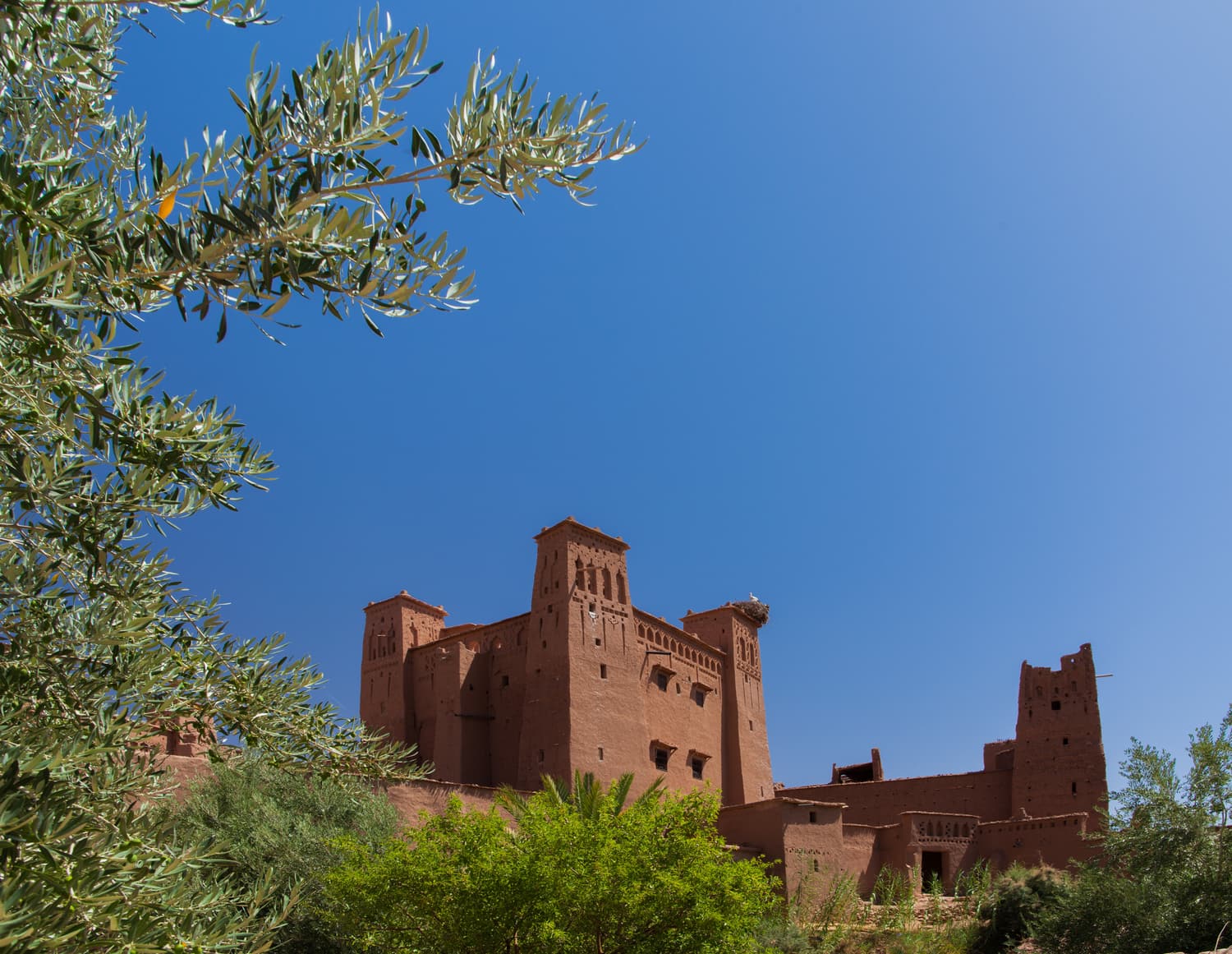
 Ounila Valley
The old caravan road north
Before the modern highway, every camel train from Marrakech came down this narrow red valley. The back road from Aït Benhaddou to Telouet threads past troglodyte villages, terraced almond gardens and half a dozen forgotten kasbahs in 40 slow kilometres.
 Atlas & Ounila valley
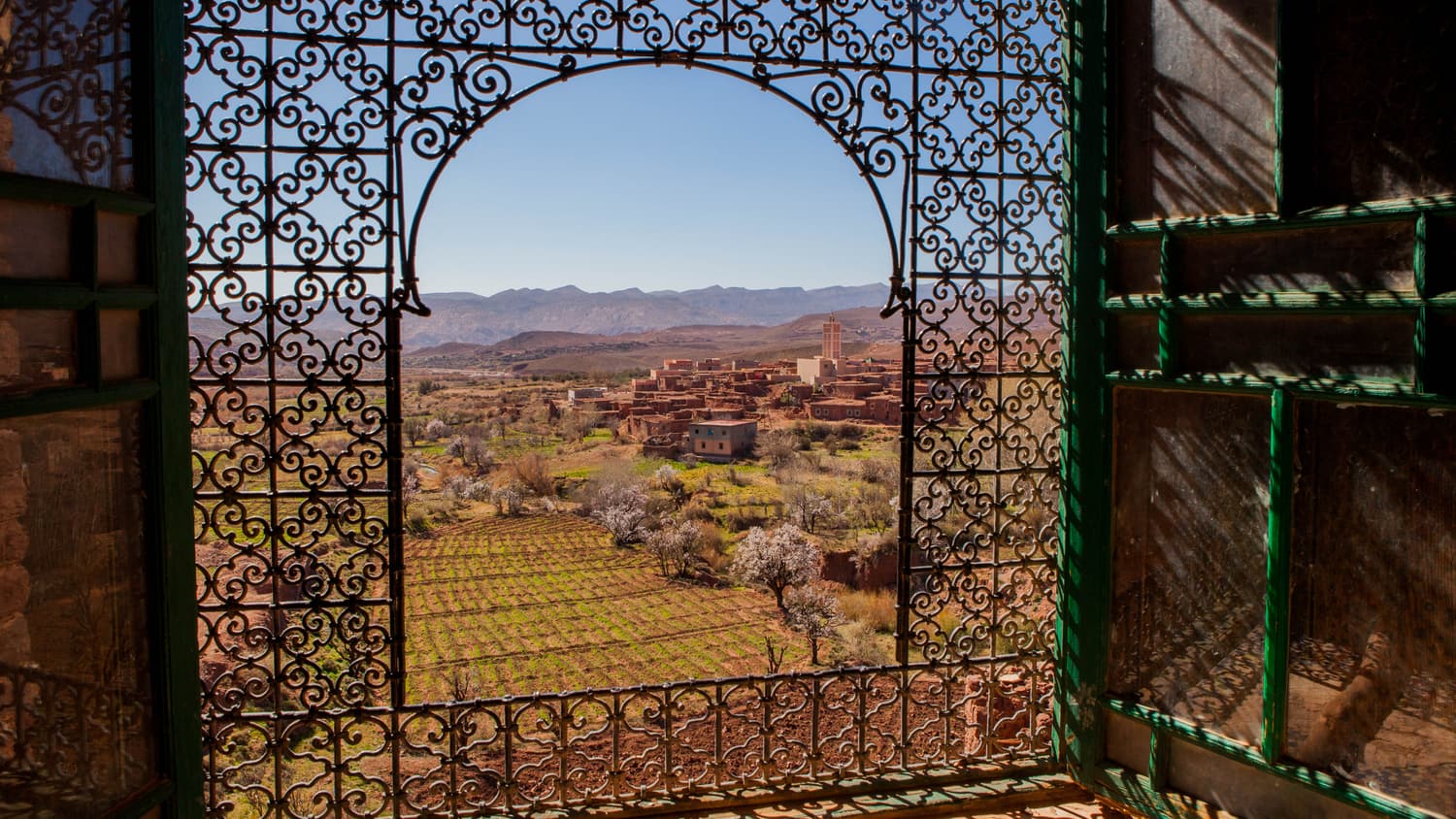
 Telouet Kasbah
The Glaoui palace in ruins
The mountain seat of the Glaoui, the pasha family who ruled southern Morocco until 1956. From outside it is a crumbling mud fortress; inside, two restored salons of carved cedar, painted plaster and zellij tile explain exactly how much power passed through here.
 Ouarzazate & the oases
 Atlas Film Studios
Hollywood in the desert
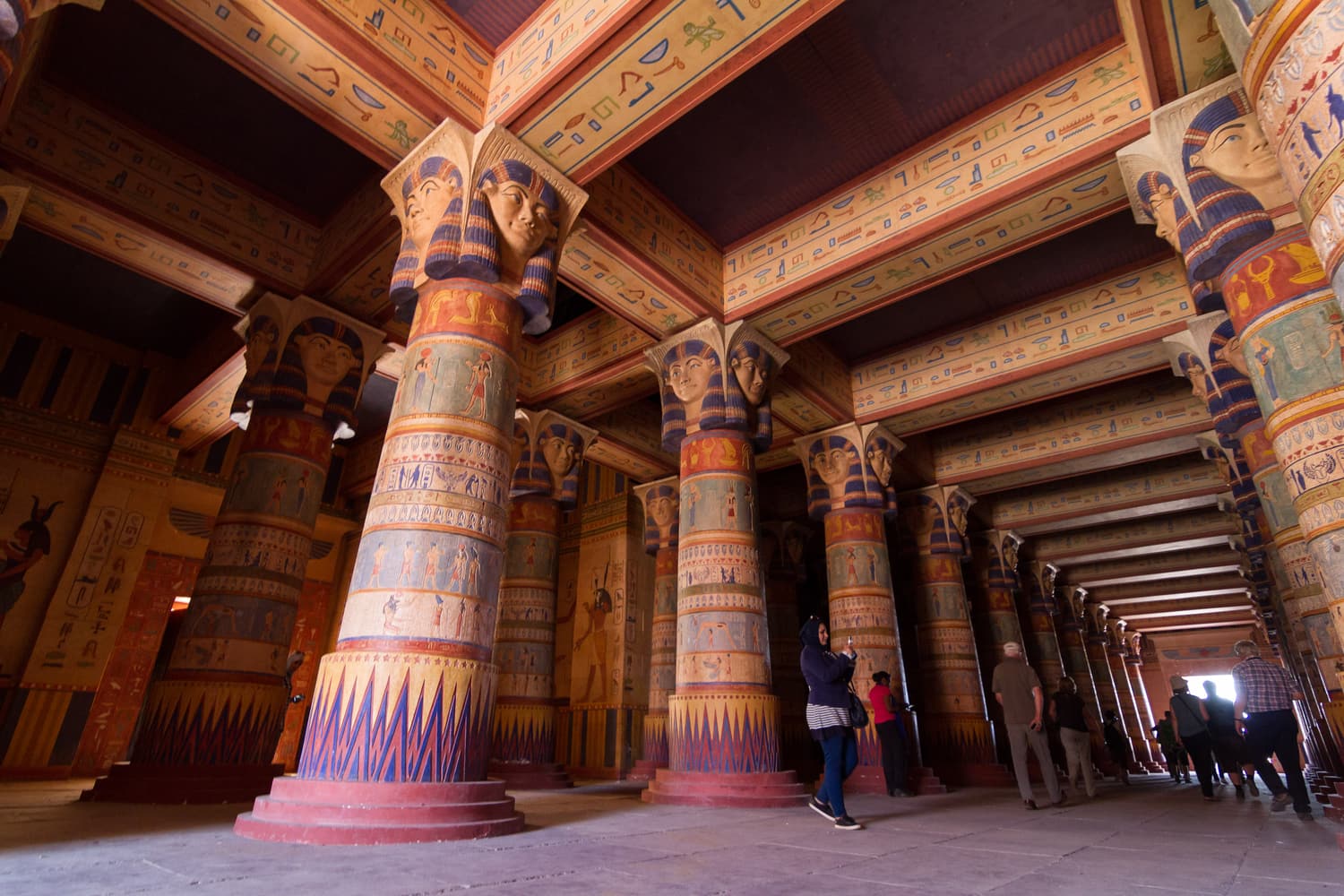
Africa’s largest film studio sits five kilometres outside Ouarzazate on a plain of bare hammada. The guided tour walks you through Egyptian temples, a Tibetan monastery and the aircraft from The Jewel of the Nile — sets left standing from Gladiator, Kundun, Asterix and Game of Thrones.
See all of them, with directions and tours, in our things to see guide.
What it costs
Southern Morocco is inexpensive, and Aït Benhaddou is no exception:
| Item | Typical price |
|---|---|
| Entry to the ksar | Free |
| Entry to a private kasbah | 10–20 MAD |
| Local guide (2 hours) | 200–300 MAD, or about €26 pre-booked |
| Tagine on a terrace | 60–100 MAD |
| Guesthouse double, per night | €29–€85 |
| Atlas Film Studios ticket | ≈80 MAD |
| Kasbah Taourirt, Ouarzazate | ≈60 MAD |
| Day trip from Marrakech | €20–30 |
What to eat
The village runs on tagine — chicken with preserved lemon, lamb with prunes, vegetable with argan oil — cooked slowly in the conical clay pot it is named after. Terrace restaurants on the village side all serve a competent version with the ksar as the view. Order it when you arrive rather than when you are hungry: a good tagine takes 45 minutes.
Beyond that, look for harira (tomato and lentil soup), khobz baked in a communal oven, and mint tea poured from height into small glasses. Alcohol is not widely served; the larger hotels in Ouarzazate have licences, the village guesthouses generally do not.
Where to stay
Staying the night is the single biggest upgrade you can make to this trip. Options fall into three groups:
- Riads in the village — five to ten minutes’ walk from the bridge, €29–€85, and you get the ksar to yourself at dawn.
- Kasbah guesthouses across the valley — quieter, with a pool and the ksar as the view.
- Ouarzazate hotels — 30 km away, more choice, full-service five-stars and better for an early desert departure.
We compare the best of each, with live rates, on our where to stay page.
Practical details
- Money: Moroccan dirham (MAD). There is an ATM in the modern village but it is unreliable — draw cash in Ouarzazate or Marrakech.
- Language: Tashelhit and Arabic locally, French almost universally in tourism, English widely in guesthouses.
- Dress: modest and covered shoulders is appreciated in a working village. Shoes with grip matter more than you think.
- Heat: in July and August the valley regularly passes 40 °C. Carry water; there is little shade on the climb.
- Connectivity: 4G is good in the village. Guesthouse Wi-Fi is variable.
Common mistakes
- Arriving at midday in July. The light is flat, the heat is brutal and the coaches are all there.
- Treating it as a photo stop. Cross the river and climb — the ksar from the car park is the least interesting angle.
- Skipping Ouarzazate. It is 30 km away and holds the film studios and Kasbah Taourirt.
- Not carrying small notes. Nothing here takes cards, including the kasbah entries.
- Booking a day trip when you had two days available. See the tour comparison.